
music
TIME DIARY AMBIENTS
1. Timeset one 16:11
2. Timeset two 19:30
2. Timeset two 19:30
The Time Diary AMBIENTS was created as an alternative or different perspective on the collection of moods on the album "Time Diary," recorded with outstanding pianist Mira Opalińska. The music deals with time suspended in space, elusive, inexorable, inescapable, undeniable and invites listeners into a space where what’s gone continues to linger, not fully vanished, not entirely present.
It is a sequel to the aforementioned album, whose prequel will be an serial of compositions call "All Bygone Days", for creating which I used original piano recording from 1990 and transformed them electronically and add very discreet synthesizers. The entire album will constitute a trilogy – a musical story whose beginning, seemingly quite distant, perfectly fits the musical moods you can find not only on "Time Diary", but also on "Cat's Songs - 17 Haiku for Piano", as well as on other Drumbientone albums.
Released August 6, 2026. Limited Mini-LP edition, LP
It is a sequel to the aforementioned album, whose prequel will be an serial of compositions call "All Bygone Days", for creating which I used original piano recording from 1990 and transformed them electronically and add very discreet synthesizers. The entire album will constitute a trilogy – a musical story whose beginning, seemingly quite distant, perfectly fits the musical moods you can find not only on "Time Diary", but also on "Cat's Songs - 17 Haiku for Piano", as well as on other Drumbientone albums.
Released August 6, 2026. Limited Mini-LP edition, LP
MEMORY OF THE SUN
1. G Cloud 03:51
2. Memory of the Sun 04:52
2. Memory of the Sun 04:52
This music was originally released as super limited edition of ten 7" EP only for "Voyager Dreams" patrons, who help realized the album. Contains two compositions which are Voyager's dreams and which are not included onto the original 12" album.
This two tracks completing the whole picture of the Voyager Dreams sessions.
Released May 22, 2026. Limited 7‟ EP
This two tracks completing the whole picture of the Voyager Dreams sessions.
Released May 22, 2026. Limited 7‟ EP
ENDLESS FLIGHT
1. Endless Flight 20:32
2. Flying Frogs 09:21
3. Flight to Unknown 17:00
2. Flying Frogs 09:21
3. Flight to Unknown 17:00
Endless Flight is an complementum to the album "Voyager Dreams".
The idea for this music was born while working on voyager dreams.
Both Voyager One and Voyager Two probes have been flying in the unknown since 1977.
The endless flight of both probes was the inspiration for this music.
Endlessness is calling
The idea for this music was born while working on voyager dreams.
Both Voyager One and Voyager Two probes have been flying in the unknown since 1977.
The endless flight of both probes was the inspiration for this music.
Endlessness is calling
Released April 14, 2026. Limited Mini-LP edition
INFINITUDE
1. Cosmic Inflation 6.06
2. Cosmic microwave background 10.29
3. Edge of observable universe 14.08
4. Infinitude 9.48
5. Multiverses 13.46
I invite you to cosmic journey back in time from the Big Bang, the beginning of "Cosmic Inflation", when the universe began its endless expansion, through light. The light, which first appeared in space in moment Big Bang, is still present in space and is called the "Cosmic Microwave Background", the oldest light in the universe.
As Professor of Harvard University - Avi Loeb said, the actual "Edge of the Observable Universe" is at the distance that any signal could have traveled at the speed of light in the 13.8 billion years that have passed since the birth of the universe. As a result of the expansion of the universe, this edge is currently 46.5 billion light-years away.
Beyond this lies only the unknown, something we cannot explore due to the lack of light. Researchers claim it is the "Infinitude", boundless space. Some theories claim that other universes, called the "Multiverses", exist there. Perhaps one day they will be explored and discovered.
For now, they remain a mystery to us.
I wanted to convey the phenomenon of light spreading in endless space through music.
Let's begins.
Released January 17, 2026. Streaming, Dolby ATMOS
As Professor of Harvard University - Avi Loeb said, the actual "Edge of the Observable Universe" is at the distance that any signal could have traveled at the speed of light in the 13.8 billion years that have passed since the birth of the universe. As a result of the expansion of the universe, this edge is currently 46.5 billion light-years away.
Beyond this lies only the unknown, something we cannot explore due to the lack of light. Researchers claim it is the "Infinitude", boundless space. Some theories claim that other universes, called the "Multiverses", exist there. Perhaps one day they will be explored and discovered.
For now, they remain a mystery to us.
I wanted to convey the phenomenon of light spreading in endless space through music.
Let's begins.
Released January 17, 2026. Streaming, Dolby ATMOS
The project was co-financed by the European Union's NextGenerationEU fund under the National Recovery Plan (KPO).
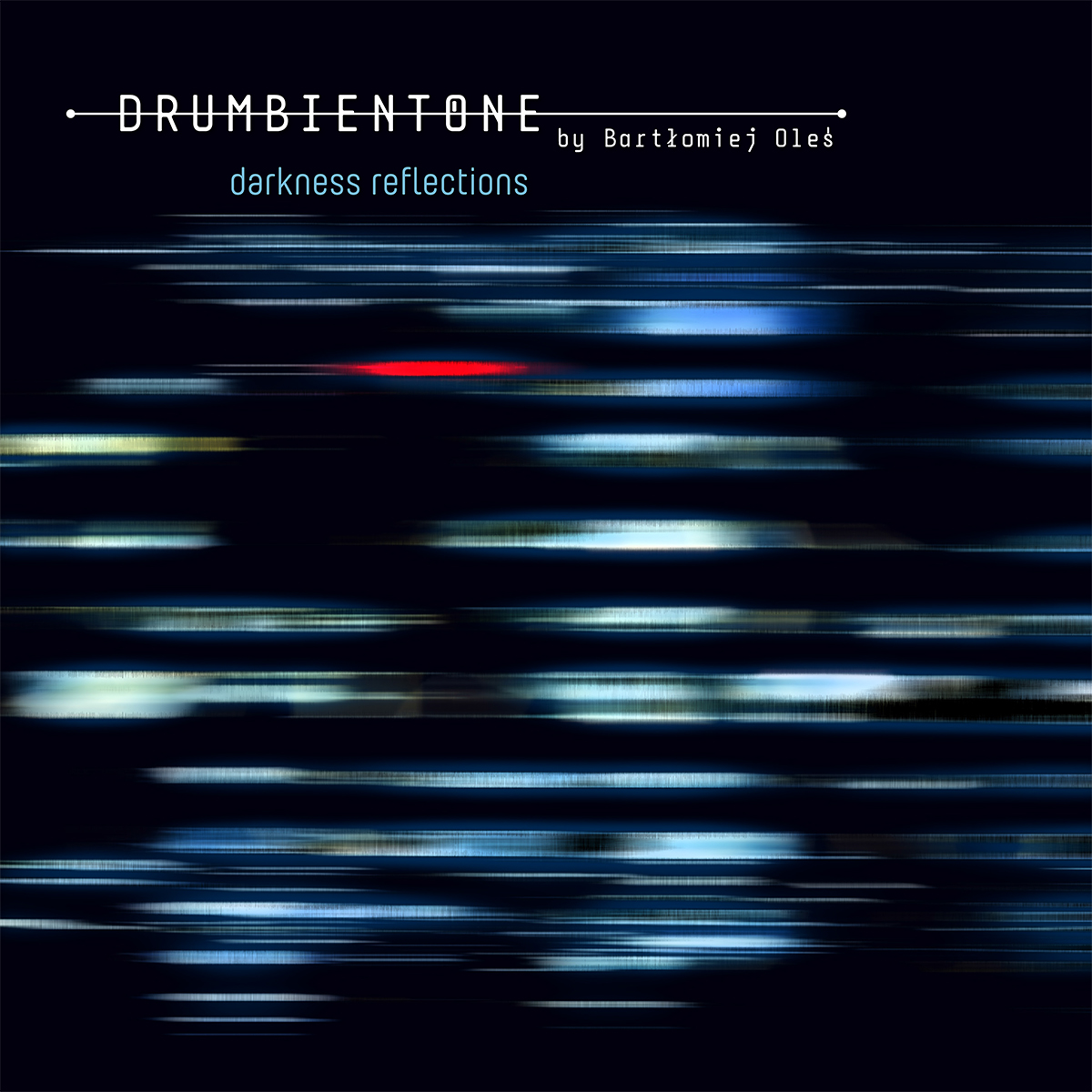
DARKNESS REFLECTIONS
1. Darkness Reflections 25:34
In essence, the ‘dark reflection’ is a speculative, yet mathematically plausible concept that posits the existence of a complete, inverted copy of our universe hidden in a mysterious dark sector, potentially providing solutions to the mysteries of dark matter and dark energy.
Most of our knowledge about the universe is invisible to the human eye; it becomes information for us through the use of specialised equipment — it is like drawing knowledge from the reflection of darkness.
Released November 5, 2025. Limited Mini-LP edition

TIME DIARY
1. Time Beings – Intro 6:09
2. Park 5:40
3. River 4:00
4. Train 5:38
5. Lake 7:06
6. Rain 4:56
7. Street 6:27
8. Time Beings – Outro 3:20
Time Diary is an album that brings together two sides of what I do: on one hand, I’m a composer working in a classical way - writing music down on paper, like in Cat’s Songs - 17 Haiku for Piano or my String Quartets, later performed by invited musicians. On the other hand, I make electronic music using synthesizers, released under the name Drumbientone (Songs of Planets and Moons, Seaish Dreams of Electric Waves, Storm of Light, Voyager Dreams).
For Time Diary, I started with the piano parts and then built the ambient layers around them, adding in some field recordings along the way. The album you’re holding is all about time - it has a meditative vibe. It treats the passage of time as a kind of state of being - fleeting, passing, irreversible. Time Diary is about communion with time, but also about returning to thoughts, places, impressions, memories...
Once again, I invited the one and only Mira Opalińska to play my piano music.
Let time embrace you.
Released September 5, 2025. CD & LP Edition
For Time Diary, I started with the piano parts and then built the ambient layers around them, adding in some field recordings along the way. The album you’re holding is all about time - it has a meditative vibe. It treats the passage of time as a kind of state of being - fleeting, passing, irreversible. Time Diary is about communion with time, but also about returning to thoughts, places, impressions, memories...
Once again, I invited the one and only Mira Opalińska to play my piano music.
Let time embrace you.
Released September 5, 2025. CD & LP Edition
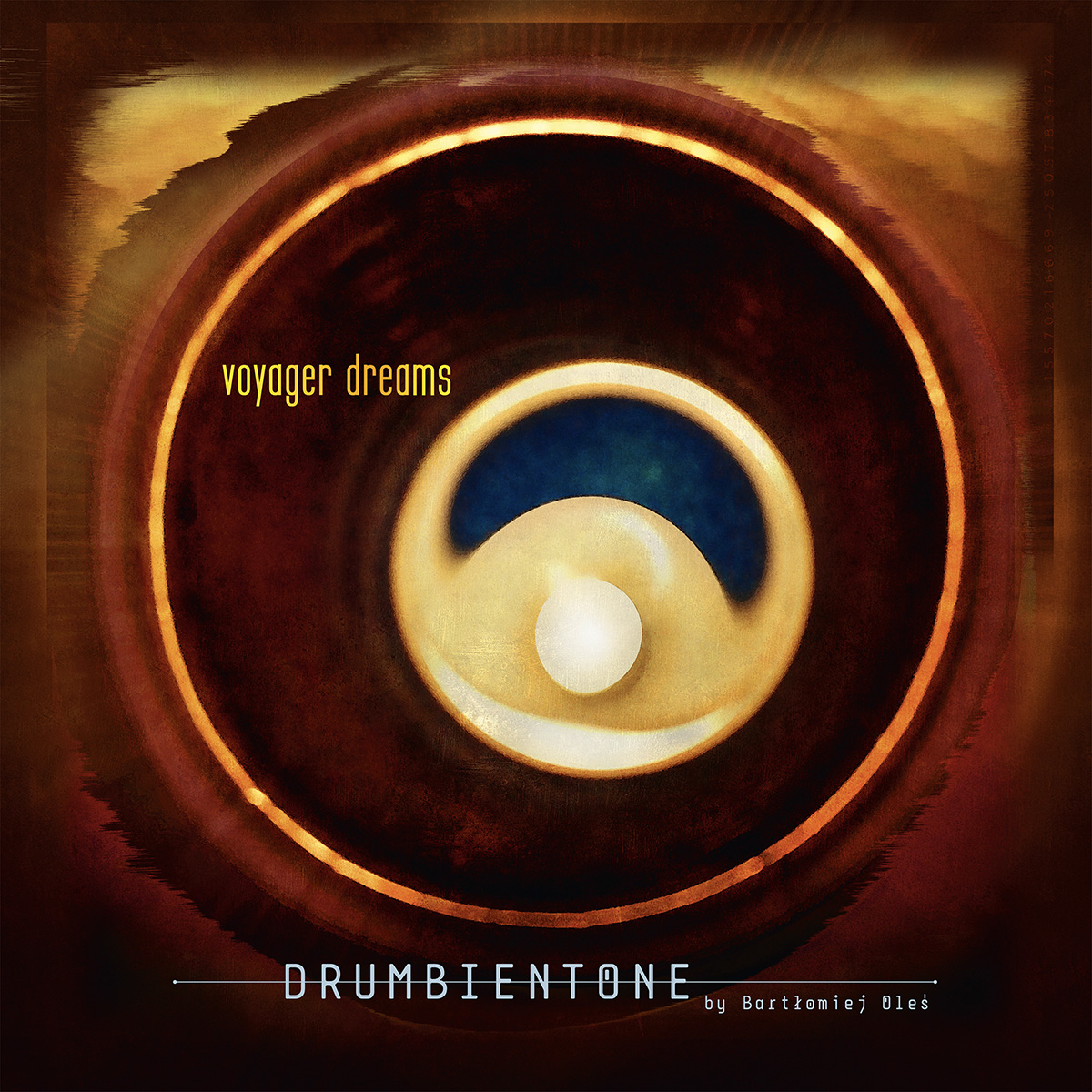
VOYAGER DREAMS
1. Dream number 969 7:13
2. Dream number 100,029 5:29
3. Dream number 300,058 5:09
4. Dream number 6 000,051 4:45
5. Dream number 9 8:43
6. Dream number 6 200 3:45
7. Dream number Don't remember 10:21
The longest journey one can imagine has lasted over 47 years. Since its launch on September 5, 1977, Voyager One has already traveled 15,570,216,669 miles (25,057,834,774.96 km) from Earth as of this writing and the distance continues to grow!
In 300 years, Voyager One will reach the Oort Cloud, which will take 30,000 years to cross. If the probe remains intact, in about 18,000 years, it will be one light-year away from the Sun.
Communication with the probe is maintained through the Deep Space Network (DSN), using antennas 34 and 70 meters in diameter, located in three complexes: near Madrid in Spain, Canberra in Australia, and Goldstone (near Barstow) in California. Attached to the hull of each Voyager probe is a 12-inch, gold-plated copper phonograph record. It contains greetings spoken in 55 languages, as well as music, sounds, and images representing the diversity of life and culture on Earth.
Voyager has already seen things as unimaginable to us as the vast distances it has traveled.
This album is about its dreams—if it has any.
Released June 5, 2025. CD & LP Edition
Communication with the probe is maintained through the Deep Space Network (DSN), using antennas 34 and 70 meters in diameter, located in three complexes: near Madrid in Spain, Canberra in Australia, and Goldstone (near Barstow) in California. Attached to the hull of each Voyager probe is a 12-inch, gold-plated copper phonograph record. It contains greetings spoken in 55 languages, as well as music, sounds, and images representing the diversity of life and culture on Earth.
Voyager has already seen things as unimaginable to us as the vast distances it has traveled.
This album is about its dreams—if it has any.
Released June 5, 2025. CD & LP Edition
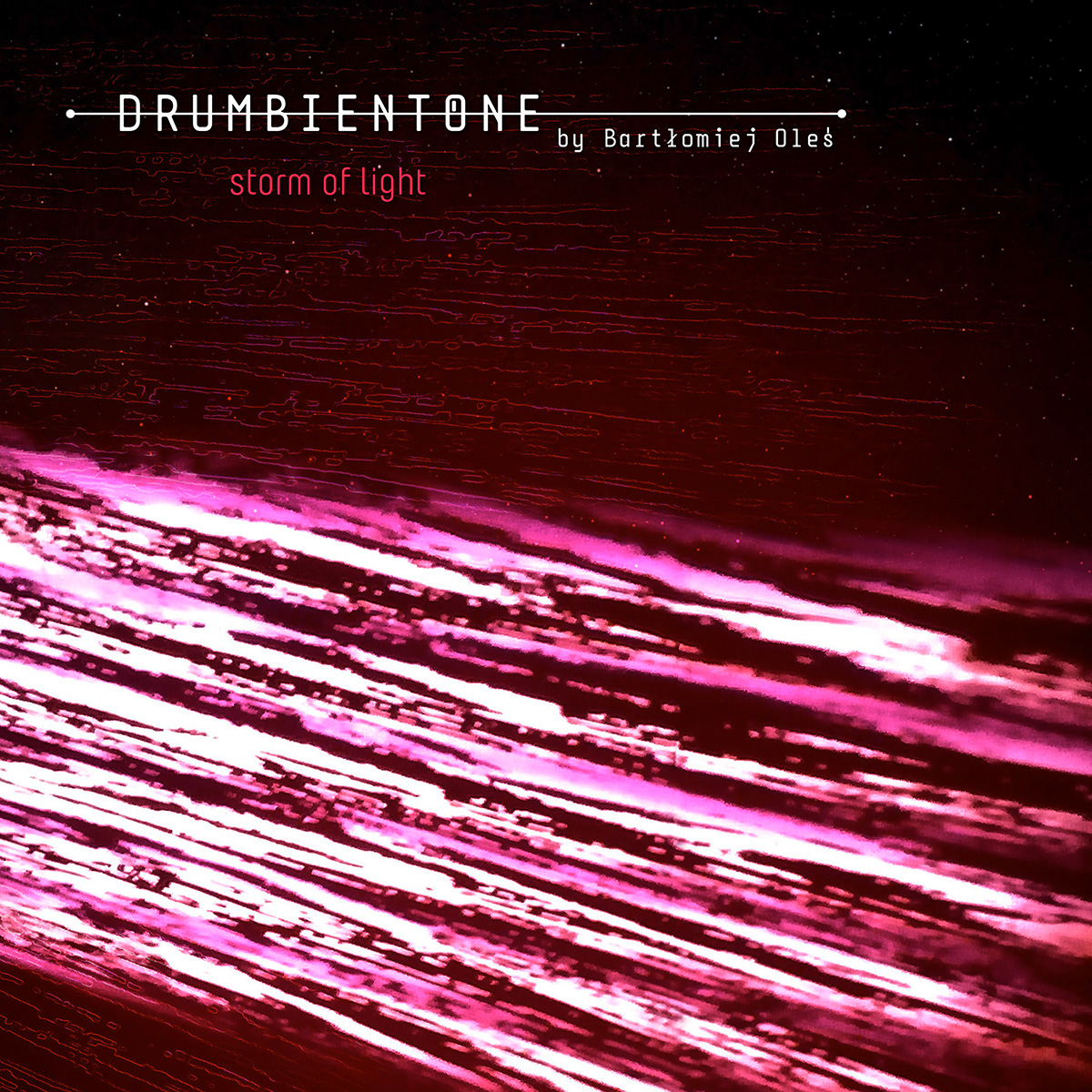
STORM OF LIGHT
1. Storm of Light Part One 24:53
2. Storm of Light Part Two 15:20
Imagine yourself the rising storm.
No a big rain storm, or a sand storm, but gigantic endless light storm in deep darkness...
Could you?
2. Storm of Light Part Two 15:20
In Arthur C. Clark novel "2001: A Space Odyssey" Bowman last words to Mission Control were "– It's empty, it goes on forever and... oh my God, it's full of stars!"
Bowman passed through the Star Gate...Imagine yourself the rising storm.
No a big rain storm, or a sand storm, but gigantic endless light storm in deep darkness...
Could you?
Released March 2, 2025. Limited Mini-LP edition
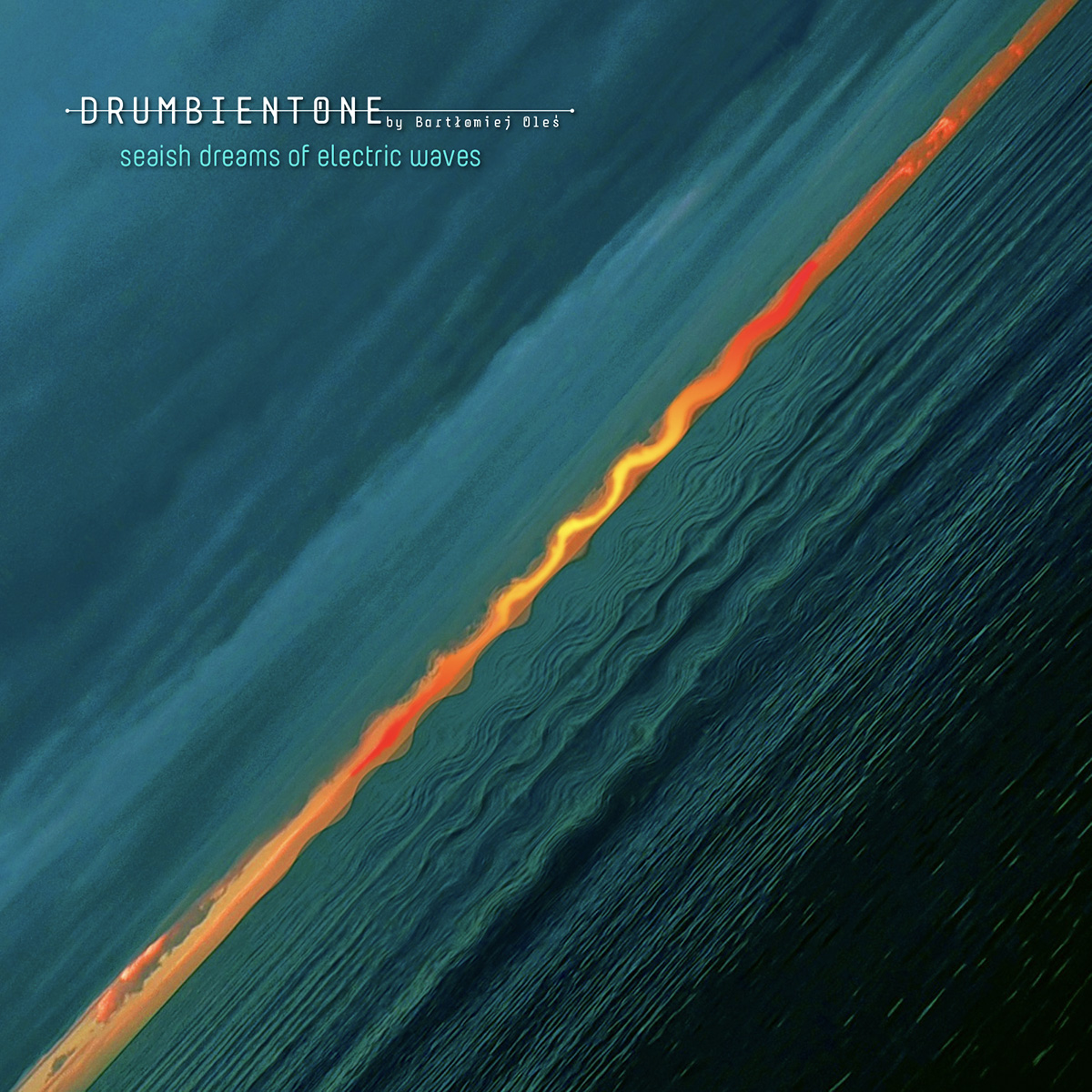
SEAISH DREAMS OF ELECTRIC WAVES
1. Timesea 16:16
2. Mirages 07:24
3. No Kontinuum 16:10
2. Mirages 07:24
3. No Kontinuum 16:10
The music on the album tales about dreams.The title "Seaish Dreams of Electric Waves" is kind of paraphrase of Philip K. Dick story about androids, well knows as Blade Runner oryginaly titled – Do Androids Dream of Electric Sheep?
The titles of particular songs are influented by albums of Klaus Schulze about whom I was thinking creating this music.
Let's dream
Let's dream
Released January 5, 2025. Limited Mini-LP edition
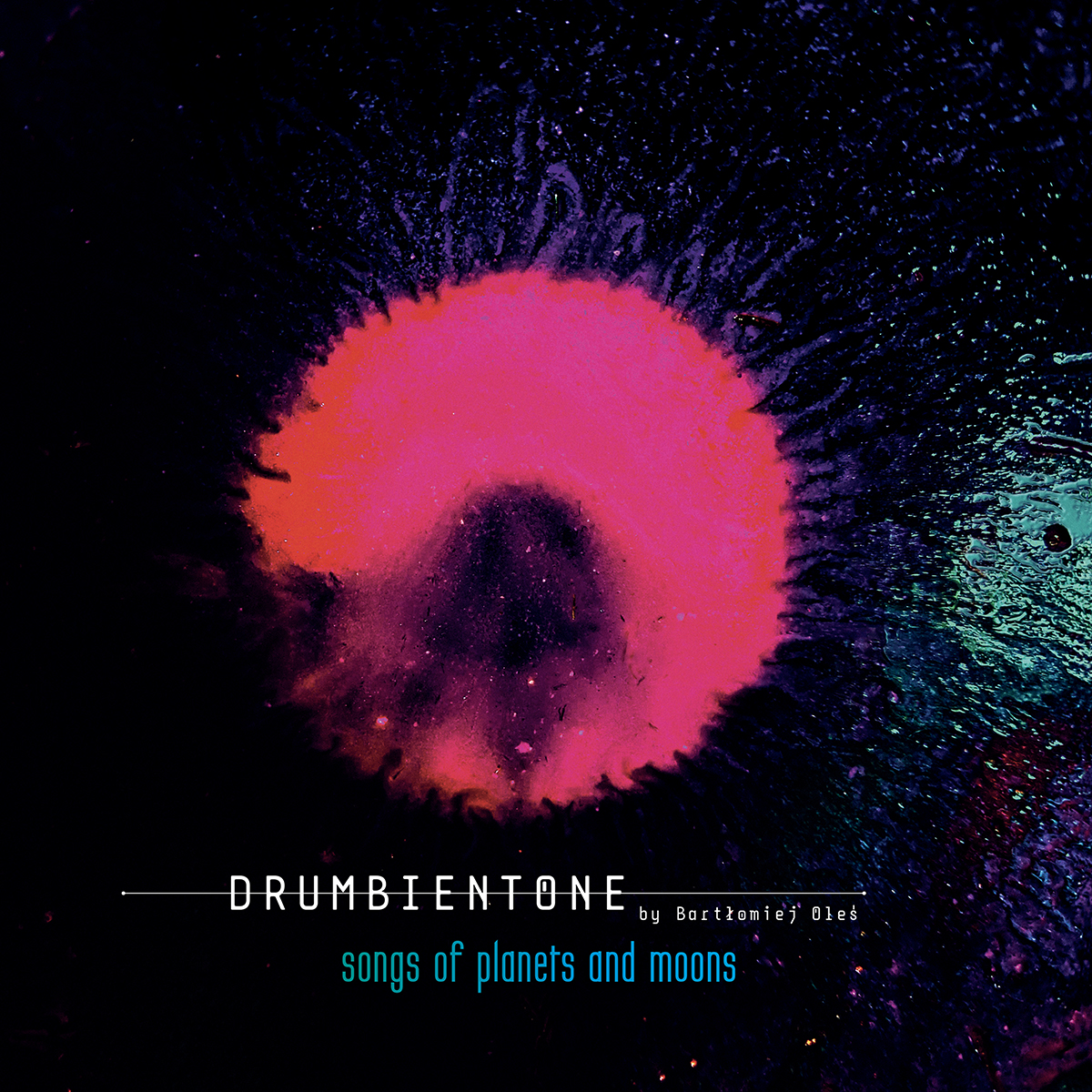
SONGS OF PLANETS AND MOONS
The story of the album ‘Songs of Planets and Moons’ began when I first heard the sounds recorded by the Cassini, Voyager 1, and Voyager 2 space probes from their explorations of the far reaches of space. These unmanned spacecraft record all of the information they encounter including the electromagnetic vibrations of planets, which are then processed into sounds audible to the human ear.
These sounds fascinated me to such an extent that I chose nineteen of them to create music from by processing them electronically and adding a kind of musical commentary as well as structure from myself.
The whole forms a kind of sonoristic expedition to the distant corners of the universe, which at times go far beyond the Solar System. It begins with Gliese 581 c, a super-Earth extrasolar planet orbiting the red dwarf Gliese 581, located in the constellation of Libra about 20 light years from Earth – which astronomically is a very short distance. Gliese 581 is ranked 89th on the list of closest star systems to Earth.
Another expedition celestial object is the extrasolar super-Earth planet GJ 1214 b, orbiting the star GJ 1214 in the constellation Ophiuchus at a distance of 13 parsecs or 42 light years from Earth. With a diameter of about 2.7 times that of Earth, it is largely composed of water and probably hydrogen. GJ 1214 b is considered the best candidate for an oceanic planet.
Next point of journey – Kepler-22b is also an extrasolar planet located in the ecosphere of a Sun-like star. The planet has a diameter 2.4 times that of Earth and is located about 600 light years from the Solar System in the Cygnus constellation. As its mass and density are unknown, it is not known whether it resembles the rocky Earth in structure, but we do know that it orbits the star Kepler-22 in 290 days.
Proxima Centauri b (Proxima b), the closest known extrasolar planet, is an Earth-type extrasolar planet orbiting the star Proxima Centauri. This star is a component of the larger Alpha Centauri triple system and the closest star to the Sun.
Eris is a trans-Neptunian object, i.e., a planetoid revolving around the Sun beyond the orbits of Neptune. Its mass was estimated shortly after its discovery to be greater than that of Pluto and for this reason it was referred to in the media as the tenth planet. Along with Pluto and Ceres, it is classified as a dwarf planet.
The gas giant Jupiter, is the largest planet in the Solar System and the fifth planet from the Sun. Jupiter’s mass is slightly less than one thousandth the mass of the Sun, but still two and a half times greater than the combined mass of the other planets in the Solar System. Together with Saturn, Uranus and Neptune, they form a group of gas giants, sometimes also referred to as the Jovian planets.
While Jupiter is orbited by ninety-five moons, Amalthea or Jupiter V, is the largest of Jupiter’s four inner moons with an irregular shape whose surface is covered with numerous impact craters. Amalthea’s average density is relatively low at 0.86 g/cm3. This suggests that it is composed largely of water ice and that its interior has a porous structure.
Jupiter’s eighth largest moon is Elara, an irregularly shaped moon that is the thirteenth natural satellite in terms of distance from Jupiter. The object has a diameter of about 86 kilometers and orbits the planet in 259 days.
Carme, or Jupiter XI, is most likely an intercepted asteroid that suffered a collision and disintegrated into a dozen or so pieces, which are now moons included in the Carme group. This group is characterized by similar orbits and a reddish color. Carme is the largest object of the group and its mass accounts for as much as 99% of the entire group.
Jupiter’s suite (tracks 6 – 10) is rounded off by Io, or Jupiter I, which is one of the Galilean moons. It is the third largest moon of Jupiter and the fourth largest in the Solar System. It is characterized by extremely strong volcanic activity as a result of strong tidal deformation.
Venus, on the other hand, is the second most distant planet in the Solar System from the Sun as well as the third most luminous celestial body visible in the sky after the Sun and Moon. Classified as a rocky (a.k.a. Earth-type) planet, it is sometimes referred to as a ‘twin planet’ or ‘sister Earth’ due to its similar size, mass, and chemical composition.
Venus, on the other hand, is the second most distant planet in the Solar System from the Sun as well as the third most luminous celestial body visible in the sky after the Sun and Moon. Classified as a rocky (a.k.a. Earth-type) planet, it is sometimes referred to as a ‘twin planet’ or ‘sister Earth’ due to its similar size, mass, and chemical composition.
Bianca or Uranus VIII is a small inner moon of Uranus that was discovered on January 23, 1986, in images sent by the Voyager 2 probe. Virtually nothing is known about it except its orbital parameters and size.
Titan, also called Saturn VI, is Saturn’s largest moon and the only one in the Solar System surrounded by a dense atmosphere in which complex weather phenomena occur. It is also the only body outside of Earth on which surface reservoirs of liquid, specifically lakes of liquid methane, have been discovered.
The dwarf planet Pluto, also known as a plutoid, is the brightest object in the Kuiper Belt. It belongs to the broader group of trans-Neptunian objects and the plane on which it moves is strongly inclined to the plane of the ecliptic with a strongly eccentric orbit that partly runs closer to the Sun than the orbit of Neptune. Pluto is orbited by at least five moons, one of which, Charon, is only half of its diameter.
Charon, also called Pluto I, is Pluto’s largest natural satellite. However, due to its small size and long distance from the Sun, little is known about Charon’s structure and chemical composition. It is believed to be covered in a layer of water ice with a temperature of ca. -220°C.
Oberon, or Uranus IV, is the second largest and outermost satellite of the five main moons of Uranus. Oberon is an ice moon consisting of about 50% ice, 30% silicates, and 20% methane-bonded carbon-nitrogen components. It has numerous craters on its surface, which are covered by an unknown dark material.
Oberon, or Uranus IV, is the second largest and outermost satellite of the five main moons of Uranus. Oberon is an ice moon consisting of about 50% ice, 30% silicates, and 20% methane-bonded carbon-nitrogen components. It has numerous craters on its surface, which are covered by an unknown dark material.
Deimos, on the other hand, is the smaller and more distant of Mars’ two moons. Deimos is probably a former asteroid that was steered towards Mars by Jupiter’s gravitational field. Deimos is composed of carbon-rich rock and ice. While covered with craters, its surface is smooth due to the filling of the craters with a thick layer of regolith.
The dwarf planet and plutoid, Haumea, belongs to the Kuiper Belt which is an area of the Solar System extending beyond Neptune’s orbit. It has a recently discovered ring, 75% of its surface is covered in ice, and it orbits the Sun in an eccentric orbit that takes around 281 years.
Methuselah (PSR B1620-26 b) is an extrasolar planet located about 12,400 light years from Earth in the constellation of Scorpius. The planet orbits the binary system PSR B1620-26, which is composed of a pulsar and a white dwarf. The oldest known planet, it is believed to be 12.7 billion years old (93.1% of the age of the Universe, which is 13.75 billion years old).
Have a good trip
Have a good trip
- Gliese 581 c 03:22
- GJ 1214 b 07:06
- Kepler-22b 01:58
- Proxima Centauri b 08:49
- Eris 02:26
- Jupiter 04:11
- Almathea 03:04
- Elara 00:55
- Carme 02:55
- Io 07:53
- Venus 01:36
- Bianca 03:44
- Titan 07:35
- Pluto 03:54
- Charon 03:08
- Oberon 03:02
- Deimos 03:54
- Haumea 01:41
- Methuselah 02:38
Released October 5, 2024. CD & 2LP Edition